Ontario Rail Trails: Converted Railway Corridors for Cycling
What Rail Trails Are
Ontario used to have one of the densest railway networks in North America. Branch lines ran to every small town, hauling grain, lumber, livestock, and passengers across the province. Most of those lines are gone now. The tracks were pulled up decades ago, the stations torn down or converted into libraries and cafes. But the corridors remain.
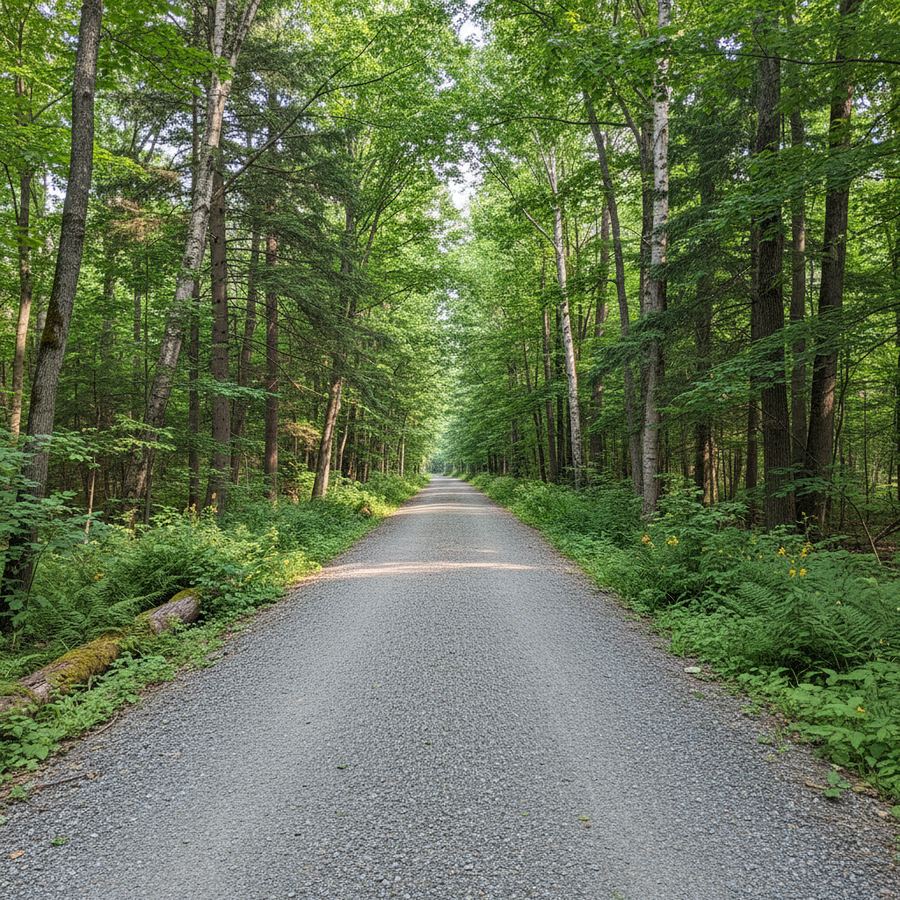
Rail trails are cycling and walking paths built on those abandoned railway beds. The grades are gentle because trains can't climb steep hills. The routes are straight because curved rail was expensive. And the corridors are wide because railways needed room for sidings and maintenance access. All of that makes them nearly perfect for cycling.
When you ride a rail trail, you're following a route that was surveyed and graded over a hundred years ago by engineers who needed the flattest, most direct path between two towns. That's a gift for anyone on a bike.
Surface Types
This is the most important practical detail about any rail trail, and it's where the experience can vary wildly.
- Crushed limestone screenings. The gold standard for unpaved rail trails. Fine, compacted stone that packs hard and drains well. When properly maintained, it rides almost like pavement. Most of the best rail trails in Ontario use this surface. The Elora Cataract Trailway is a good example of well-maintained limestone screening.
- Crushed gravel. Coarser than limestone screenings. Rideable on a hybrid or gravel bike, but slow and bumpy on anything with narrow tires. Some sections of longer trails use this, especially in less-travelled areas.
- Original ballast. The chunky rock that sat underneath the railway ties. Some abandoned corridors were never resurfaced after the tracks came out, and you're riding on baseball-sized rocks. These sections are miserable on a bike. Avoid them, or bring a mountain bike and low expectations.
- Paved. Some rail trails have been fully paved. The Georgian Trail started as a rail corridor and is now smooth asphalt. These are the easiest rail trails to ride, but purists will point out they're really bike paths at that point.
- Natural surface. Packed earth, grass, or a mix. These can be fine in dry weather and impassable after rain. Check conditions before you go, especially in spring.
Why Rail Trails Matter for Ontario Cycling
Rail trails solve the biggest problem with cycling in rural Ontario: where to ride safely. County roads can be beautiful, but they often have no shoulder, poor sightlines, and drivers who aren't expecting cyclists. A rail trail gives you a dedicated corridor that's completely separated from traffic.
They also connect towns. That's what railways did, and the trails follow the same logic. The Bruce County Rail Trail links communities across Grey-Bruce the same way the railway once did. You can ride from town to town, stop for lunch, and keep going. It's point-to-point travel by bike, which is one of the best ways to experience a region.
Ontario's rail trail network is managed by a mix of municipalities, counties, conservation authorities, and volunteer groups. Maintenance quality varies. Some trails are groomed and graded every spring. Others get attention when volunteers organize a work day. That inconsistency is worth knowing about before you plan a long ride.
Ontario's Rail Trail Network
The province has hundreds of kilometres of rail trail, spread across every region. A few highlights:
Grey-Bruce and Simcoe County have some of the best-maintained rail trails in Ontario. The Bruce County Rail Trail, the North Simcoe Rail Trail, and connecting routes give you the option for multi-day rides through farmland and small towns. The Grey-Bruce cycling guide covers this area in detail.
The Elora Cataract Trailway runs through the rolling countryside west of the GTA. It's a well-maintained crushed limestone trail with good scenery and several towns along the route for rest stops.
Eastern Ontario has a growing network of rail trails, though many are in earlier stages of development. Some sections are excellent. Others are rough enough that you'll want to check current conditions before committing to a long ride.
For our picks across the province, see the best rail trails in Ontario roundup.
Gear for Rail Trail Riding
Your bike choice matters more on rail trails than on paved paths. Here's what works:
- Hybrid bikes are the sweet spot for most rail trails. Upright position, flat bars, and tires in the 35-42mm range handle limestone screenings and packed gravel without trouble.
- Gravel bikes work well if you prefer drop bars. Run the widest tires your frame allows.
- Mountain bikes are overkill for maintained rail trails, but if that's what you have, ride it. You'll be comfortable on any surface.
- Road bikes are a poor choice. Narrow tires and aggressive geometry make loose surfaces exhausting and sketchy. Save the road bike for paved paths.
- E-bikes are great on rail trails, especially for longer rides. The motor takes the sting out of soft gravel sections.
Beyond the bike, bring more water than you think you'll need. Rail trails often run through areas with no services for long stretches. A flat kit is also non-negotiable. Gravel surfaces are harder on tires than pavement, and you'll get more flats. Carry a spare tube, a pump, and tire levers.
Trail Etiquette and Safety
Rail trails are shared spaces. You'll encounter walkers, runners, dog walkers, horseback riders, and other cyclists. Keep right, pass on the left, and announce your passes. On busier trails near towns, slow down. On quiet rural sections, you can open up a bit.
Watch for soft spots after rain. Limestone screenings drain well, but low-lying sections can hold water and turn muddy. If you see standing water on the trail, there's often soft ground underneath it.
For trail maps and condition reports, Ontario Trails is a good starting point. Local cycling clubs and Facebook groups for specific trails often have the most current information on conditions. Ontario's cycling safety page covers the rules of the road that also apply to multi-use trails.
Planning a Rail Trail Ride
The key question for any rail trail ride is whether you're doing an out-and-back or arranging a shuttle. Most rail trails are linear, which means you ride to the end and turn around, or you have someone pick you up. Some riders drop a car at each end. Others ride one way and get picked up.
For your first rail trail ride, pick a well-maintained trail, start at one end, ride for an hour, and turn around. That gives you a feel for the surface and the pace before you commit to a full traverse. If you're looking for suggestions, our family-friendly rides page includes several rail trails that are flat, short, and well-maintained enough for casual riders.