Easy Bike Rides in Ontario for Beginners and Casual Cyclists
What Makes a Ride Easy
An easy ride is one where you can focus on enjoying yourself instead of worrying about whether you'll make it back to your car. It means flat terrain, a smooth surface, a manageable distance, and no sections where you're white-knuckling it through traffic or grinding up a hill in your lowest gear.
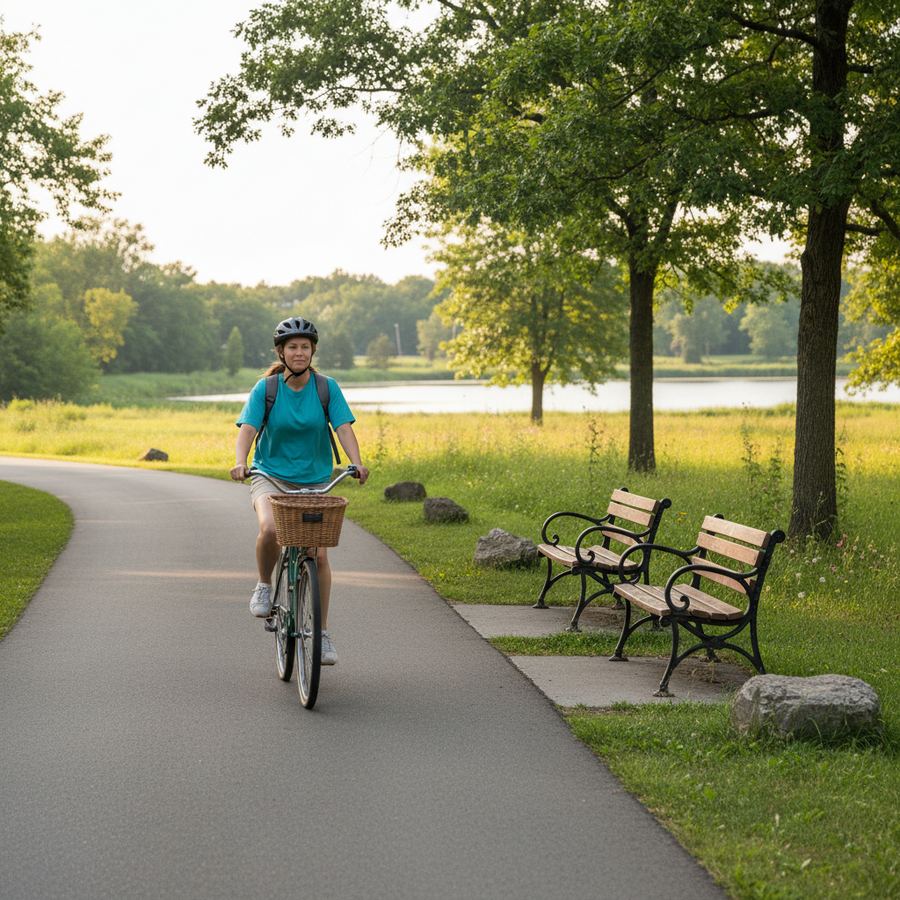
Easy doesn't mean boring. Some of the most pleasant riding in Ontario is on flat, paved waterfront paths where the hardest decision is whether to stop for ice cream now or on the way back. Easy means accessible. It means a ride you can do on whatever bike you have, at whatever fitness level you're at, without it turning into an ordeal.
This page is for people who are new to cycling, getting back on a bike after years away, recovering from injury, or just looking for a relaxed ride without any type-two fun. No judgment here. Everyone starts somewhere, and a lot of experienced cyclists still prefer easy rides most of the time.
Flat vs. Hilly: Why It Matters
Elevation is the single biggest factor in ride difficulty. A flat 20 km ride is easier than a hilly 10 km ride, every time. When you're starting out, hills are the enemy. They spike your heart rate, burn out your legs, and make you question your life choices. Flat riding lets you find a comfortable pace and hold it.
Ontario has plenty of flat terrain to work with. Waterfront paths are almost always flat. Rail trails are flat by design because trains needed gentle grades. River valley paths follow the water and stay level. The areas around Georgian Bay, Lake Huron, and the Ottawa River all have excellent flat riding.
When we say "flat," we mean it. Not "mostly flat with a few gentle hills." Not "flat except for the escarpment section." Actually flat. If a ride has any meaningful climbing, we'll tell you about it on the route page. For easy rides, we're looking for elevation changes of less than 30 metres over the whole route.
Surface Types for Beginners
The surface you ride on affects difficulty, comfort, and what bike you can use. Here's a quick breakdown:
- Paved asphalt or concrete. The easiest surface. Smooth, predictable, and rideable on any bike. Paved bike paths are the best choice for beginners. No special tires or equipment needed.
- Well-packed crushed limestone. Nearly as easy as pavement when freshly graded. Slightly slower, slightly more resistance, but comfortable on a hybrid bike with 35mm or wider tires. Most good rail trails use this surface.
- Loose gravel. Harder to ride. The bike feels unstable, especially at low speeds. Not ideal for beginners. If a trail is described as "gravel," find out what kind before you commit.
- Dirt or natural surface. Unpredictable. Fine when dry, treacherous when wet. Not recommended for new riders unless the trail is well-maintained and the weather has been dry.
For your first rides, stick to pavement. As you build confidence, try a well-maintained crushed limestone trail. Leave the loose gravel and dirt for later.
Distance Guidelines for New Riders
How far should you ride if you're just starting out? Less than you think. Here's a realistic progression:
First ride: 5-8 km total. That's roughly 20-30 minutes of riding at a casual pace. Ride out for 10-15 minutes, turn around, and come back. If you feel good, take a longer route next time. If you're tired, you made the right call.
After a few rides: 10-15 km. This is the sweet spot for casual riders. Long enough to feel like you went somewhere. Short enough that you're not wrecked the next day. Most of the waterfront paths and short rail trail segments fall into this range.
Getting comfortable: 20-30 km. At this point you've been riding regularly for a few weeks. You know your pace, you know your bike, and you can handle a couple of hours in the saddle. This opens up most of the day-ride options in Ontario.
Beyond 30 km: You're not a beginner anymore. Congratulations. Check our route pages for longer options.
The most common mistake new riders make is going too far on their first ride. You feel great for the first half, then realize you still have to ride back. Start conservative. There's no prize for distance.
What Bike Do You Need
For easy rides on paved paths, almost any working bike will do. A dusty hybrid from the garage, a second-hand mountain bike, an e-bike, a cruiser. If the tires hold air, the brakes work, and the chain doesn't skip, you're fine.
That said, some bikes make easy rides easier:
- Hybrid bikes are purpose-built for this kind of riding. Upright position, medium-width tires, flat handlebars. Comfortable for 5-30 km on pavement or packed gravel.
- E-bikes take the effort out of any ride. If fitness is a barrier, or if you want to ride further without arriving exhausted, an e-bike is a legitimate option. No shame in the motor.
- Cruiser bikes work for very short, flat rides. They're heavy and have limited gearing, so anything over 10 km or with any hills at all will be a slog.
- Mountain bikes are overkill but perfectly functional. You'll be slower on pavement than on a hybrid, but the wide tires and upright position are comfortable.
Easy Rides to Start With
Here are some types of routes that work well for beginners:
Waterfront paths are almost always flat and paved. They tend to be well-maintained, have good sightlines, and pass through areas with washrooms and water. The Kincardine lakeside path is a good example: short, flat, scenic, and you can stop for food right in town.
Town loop trails that circle through parks and along rivers are often designed for exactly this kind of riding. They're short, flat, and close to parking and services. Owen Sound has a nice harbour loop that works well for a first ride.
Short rail trail segments near trailheads work if the surface is good. Ride out 3-4 km on a well-maintained rail trail, then turn around. You'll get a feel for the surface and the scenery without committing to the full trail length.
For more specific suggestions, see our best family-friendly rides list, which overlaps heavily with easy rides. And our beginner's guide to cycling in Ontario covers everything from bike setup to what to bring on your first ride.
Practical Tips for New Riders
- Check your bike before you ride. Pump the tires to the pressure listed on the sidewall. Squeeze the brakes and make sure they grip. Spin the wheels and check for wobble. A quick five-minute check prevents most mechanical problems.
- Bring water. Even on a short ride, you'll want water. A bottle in a cage on the frame or in a backpack is fine.
- Wear a helmet. Not optional. Legally required for riders under 18 in Ontario, but smart for everyone.
- Dress for the ride, not the start. You'll warm up fast. Wear one less layer than you think you need. Bring a light jacket in a pocket if you're worried about cold.
- Go in the morning or evening. Mid-day summer heat makes everything harder. Early morning and late afternoon are the best times to ride, especially on exposed paths with no shade.
The province's cycling page has information on helmet laws, trail regulations, and cycling safety in Ontario. Ontario Trails maintains maps and condition reports for multi-use trails across the province.